The marine ecosystems of the Gulf have long shaped the cultural, social, and architectural identity of its coastal communities. The sea was not only a resource for survival but a fundamental structure of daily life, where fishing, pearling, and boatbuilding operated as collective practices performed in rhythm with tides and seasons. Access to the sea has always depended on shared knowledge and cooperation. As a borderless and fluid environment, it produces forms of spatial thinking distinct from terrestrial logics, shaping how communities relate to landscape and one another.
Over time, fishing tools and infrastructures have evolved in form, material, and scale, responding to environmental shifts, regulation, and use. Nets, enclosures, and submerged structures often remain underwater for extended periods, gradually becoming part of the seascape. Neither purely functional nor fixed, they operate as adaptive tectonic systems woven, porous, and constantly negotiated with their surroundings.
Sedimental collective emerged from this context as a material investigation into the relationship between oceanic landscapes, extraction, and residue. As the research developed, attention shifted from fishing practices towards the ecological consequences of human activity at sea, particularly the materials that remain submerged long after their intended use has ended.
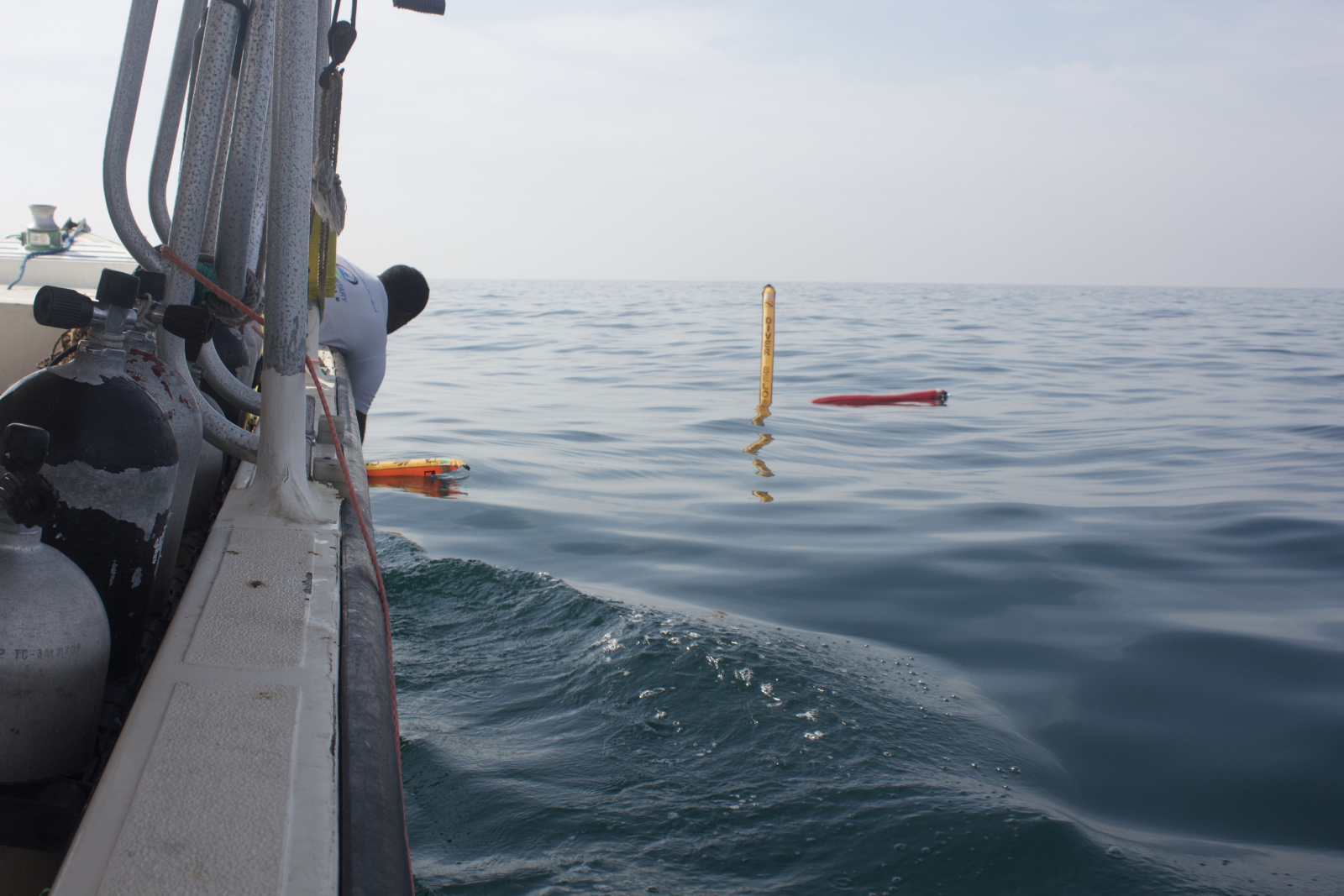
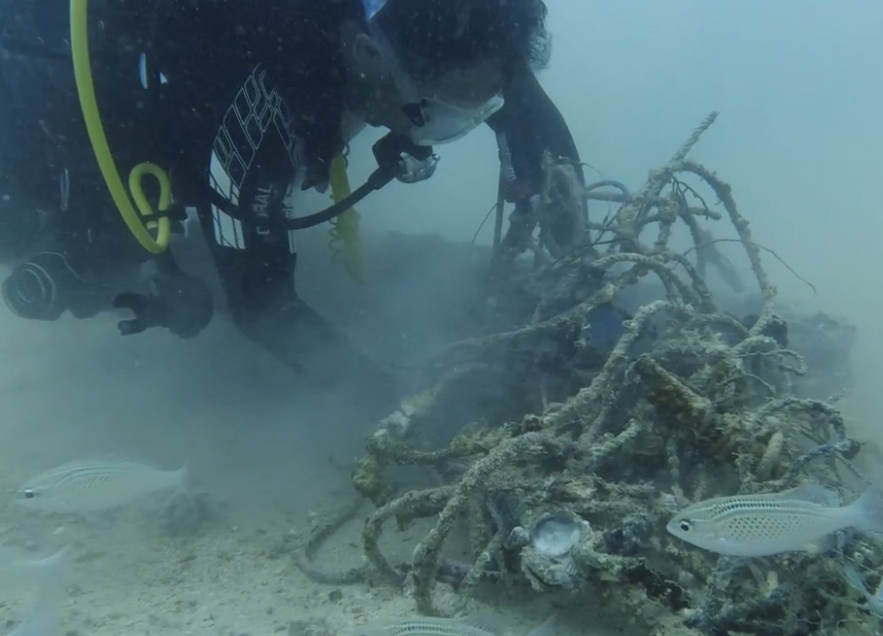
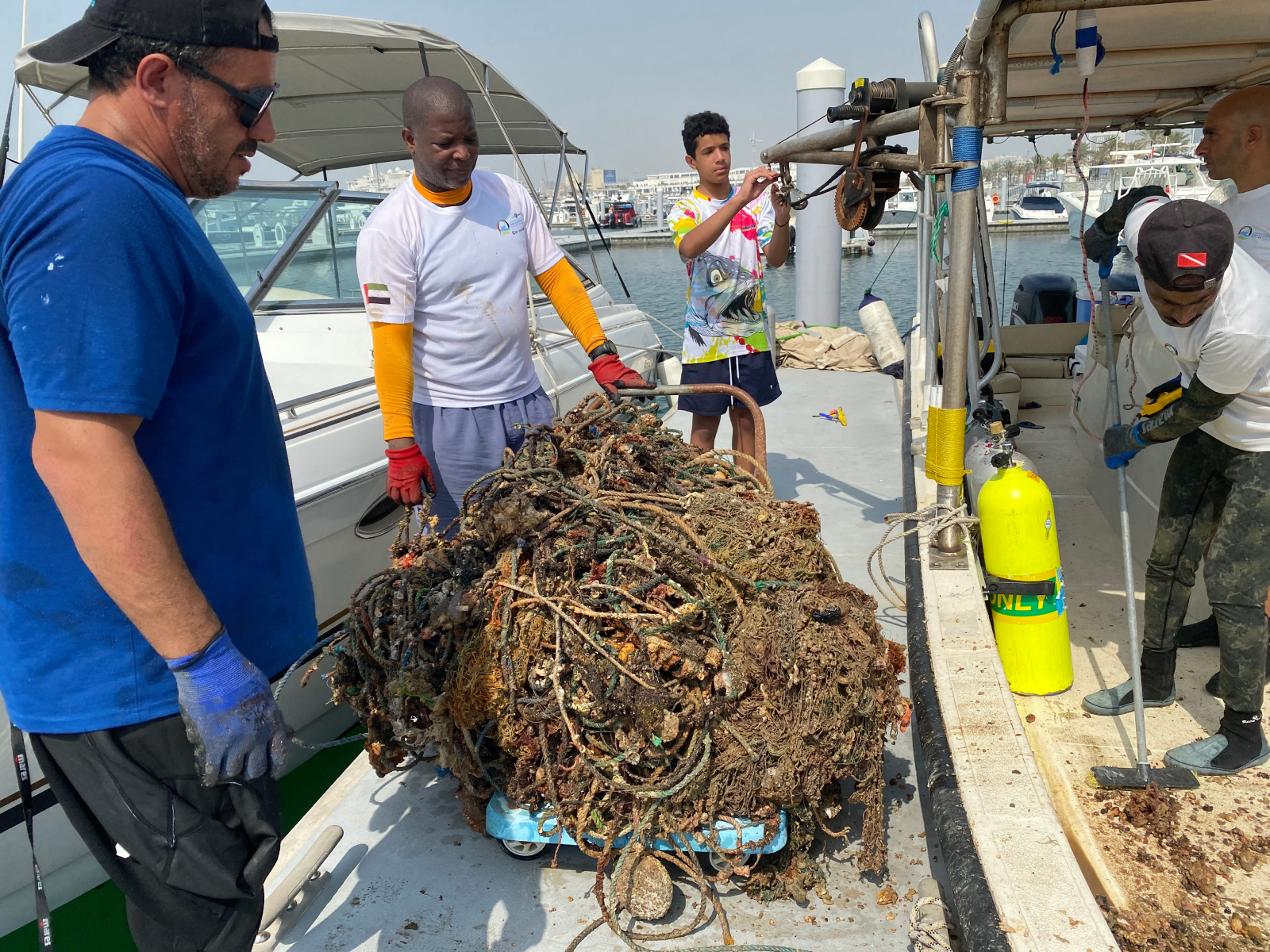
Engagement with the Dubai Voluntary Diving initiative marked a pivotal point in this development. Through regular expeditions, the group removes marine waste ranging from abandoned fishing gear to debris accumulated around shipwrecks and across the seabed. Their knowledge of sea routes, marine habitats, and changing ecological conditions significantly informed the research.
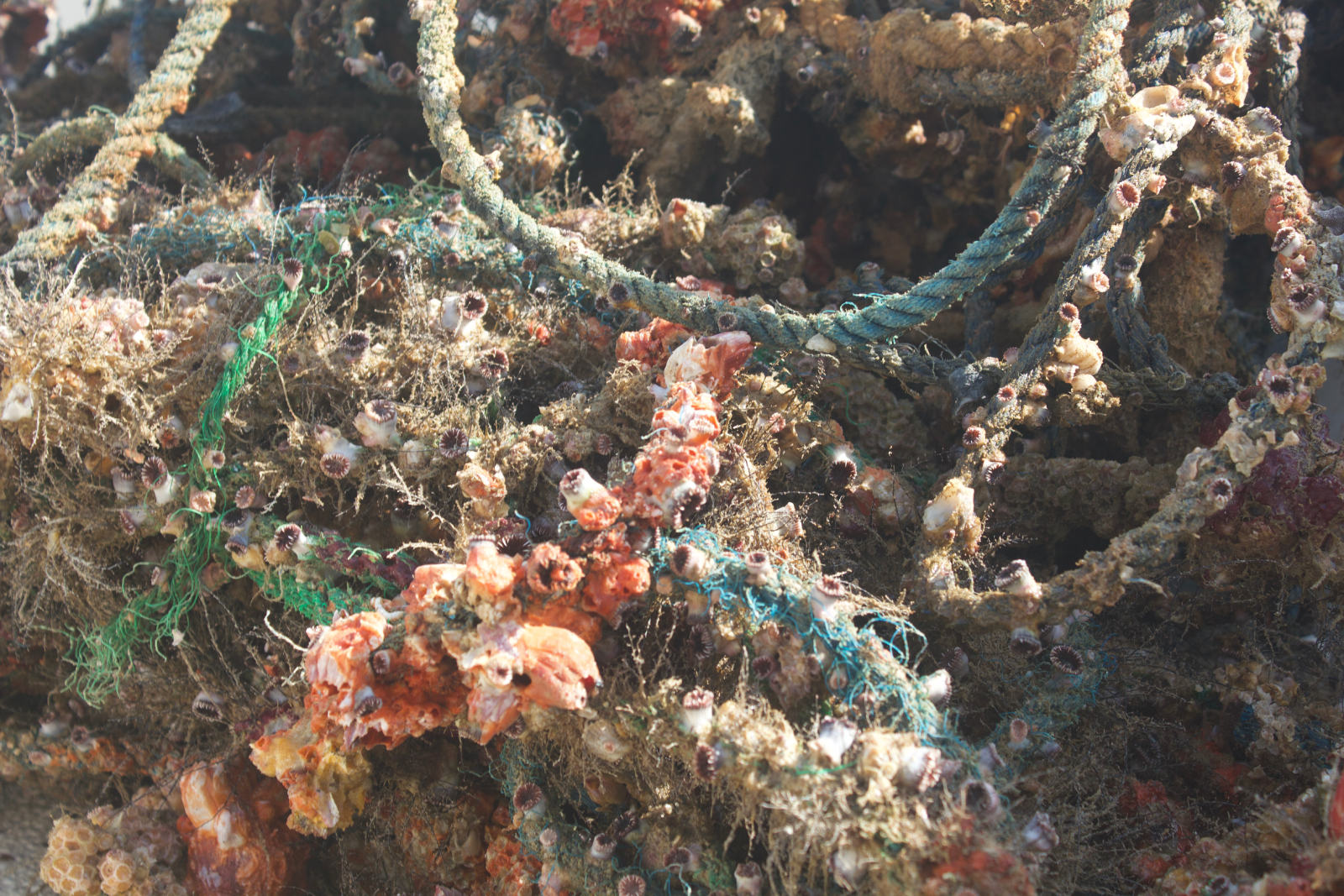
The collaboration evolved into an exploration of salvaged marine matter as building material. Abandoned nets, ropes, and traps became both physical resources and records of duration materials whose accumulation reveals unseen histories inscribed on the seafloor. Discussions with Captain Abdulla Muhsen, leader of the initiative, explored how these accumulations and natural processes of growth and deterioration could inform new forms of material production.
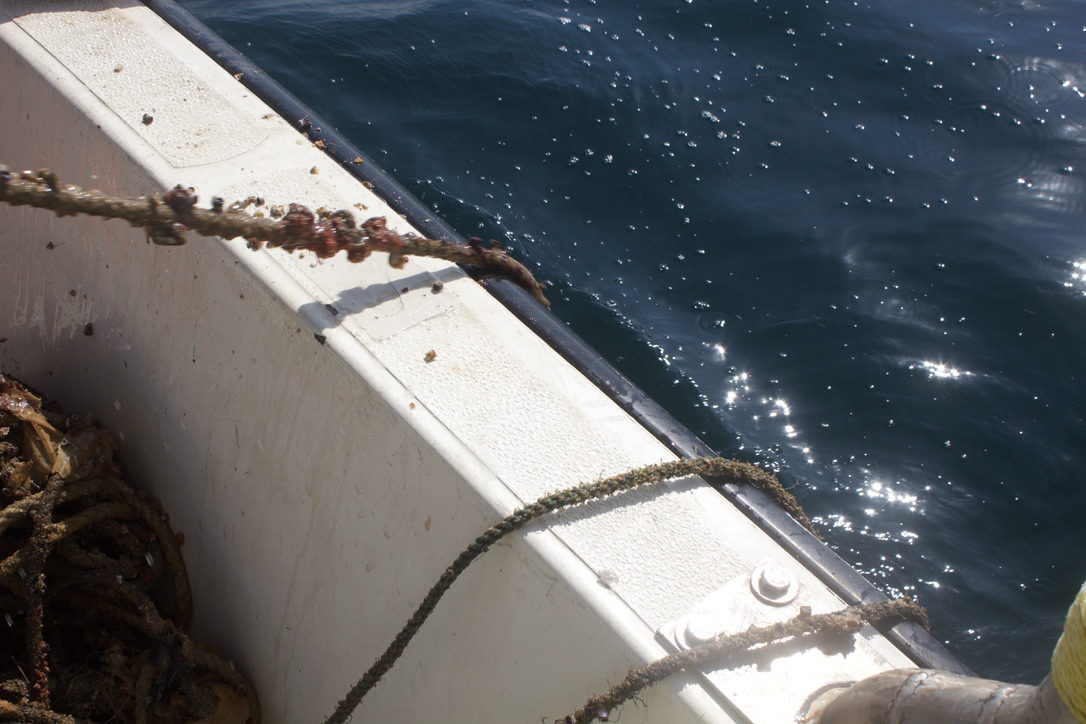
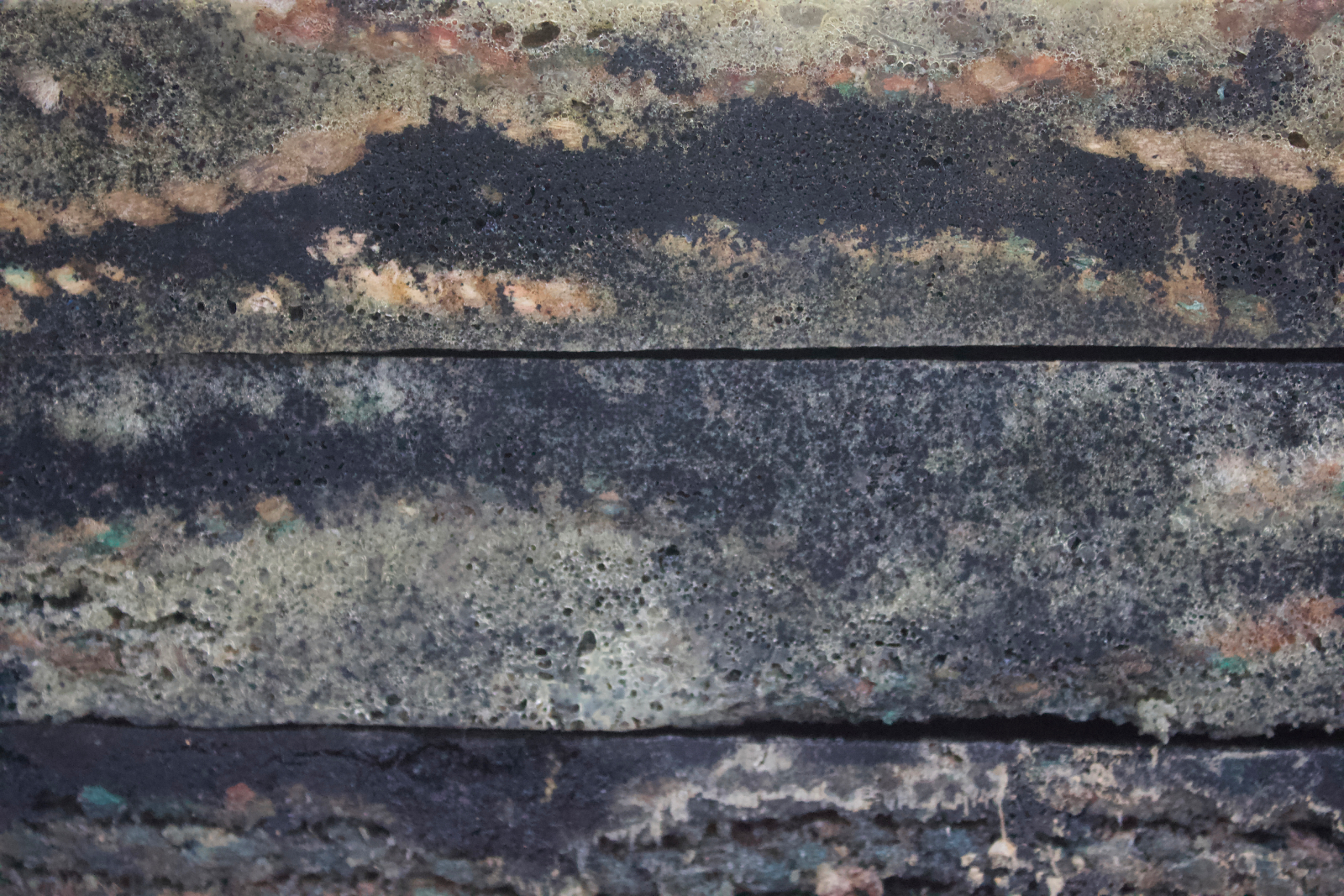
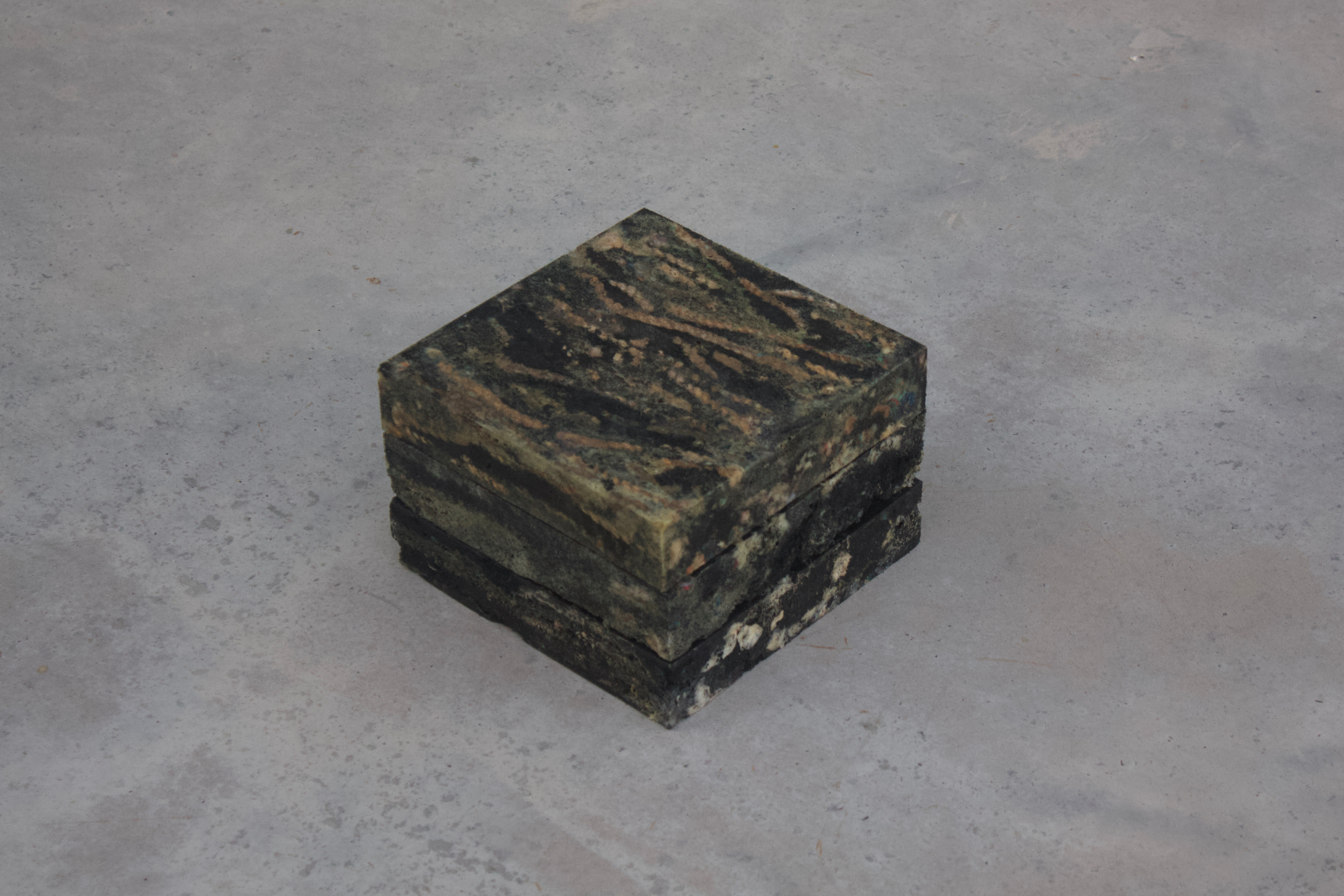
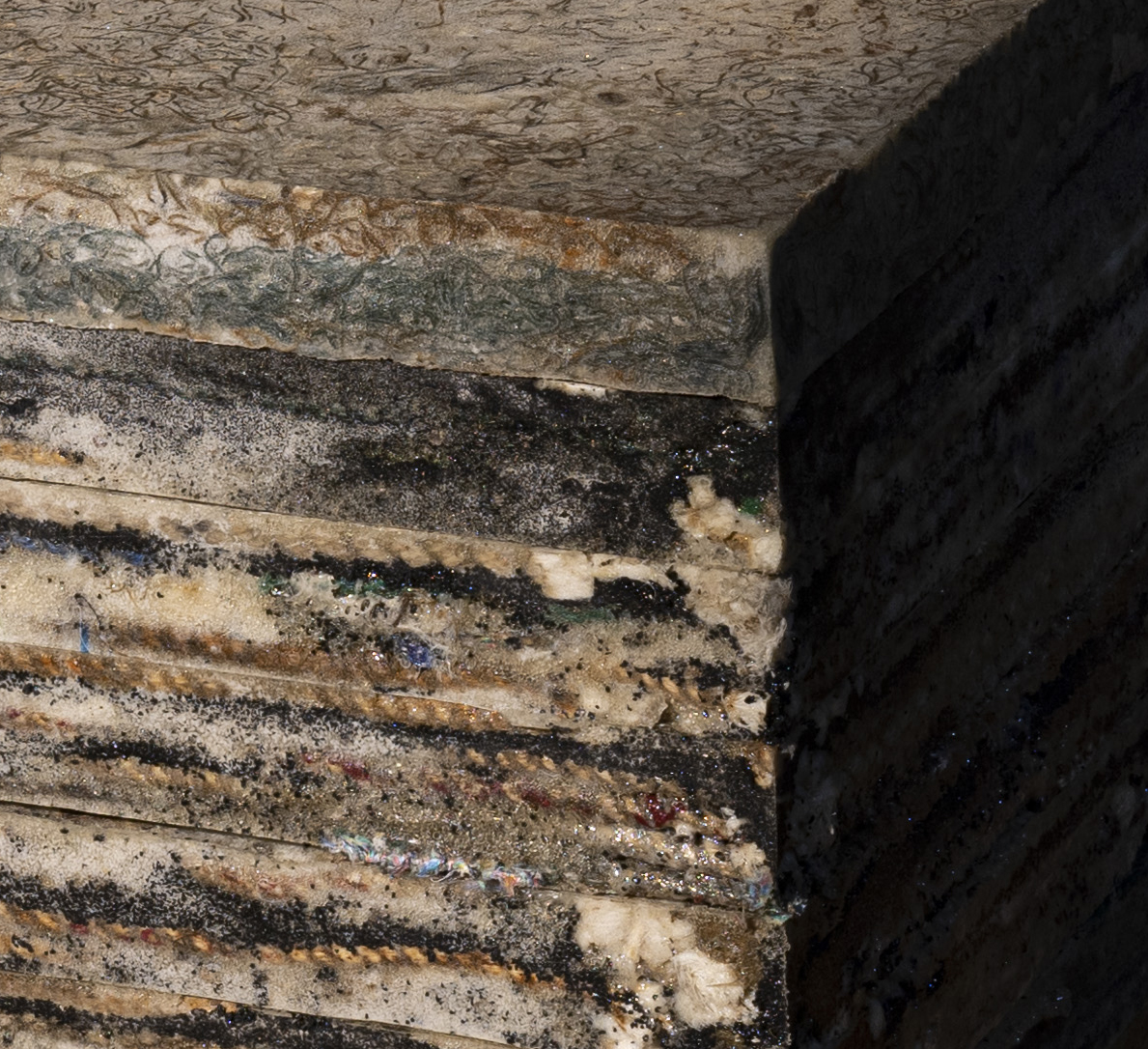
The slabs document the histories of “ghost gear” abandoned fishing tools that continue to shape marine environments after their intended use has ended. Through a process of inspecting, gathering, lifting, untangling, cleaning, cutting, piling, and compressing, the recovered matter was transformed into an architectural material carrying traces of its previous life.
Since this first architectural investigation, the Sedimental collective has expanded across scales, from spatial interventions to collectible objects. Developed through an ongoing network of divers, fishermen, researchers, and contributors, the project remains rooted in collective processes of making, learning, and exchange. Initiated as material research in 2023, it evolved into a series of collectible objects in 2025 with its first modular collection, extending the research into objects that retain the traces, densities, and histories of their submerged origins